Buyers often arrive asking about pole gauge or zipper brands, then discover that the fabric specification is where the real money — and the real warranty exposure — sits. Below is the comparison we walk first-time importers through, using the same numbers we put on our own spec sheets.
The three numbers that matter
Before comparing materials, make sure you can read a fabric spec. Three figures do most of the work:
- Denier (D) — the weight of the yarn. A 210D oxford floor is tougher than a 70D fly; it also costs and weighs more.
- Thread count (T) — threads per square inch. 190T, 210T and 300T describe how tightly the fabric is woven, which affects down-proofing and feel.
- Hydrostatic head (HH / PU rating) — the water-column pressure the coating withstands. 2000 mm is a dry-climate rainfly; 3000–5000 mm is where a family tent should sit.
Side-by-side comparison
| Weight | Nylon wins (lightest) → polyester → canvas (heaviest) |
|---|---|
| UV stability | Polyester wins — nylon degrades measurably faster in sun |
| Stretch when wet | Nylon sags and re-tensions; polyester holds pitch |
| Breathability | Canvas wins by a wide margin, polyester second |
| Pack volume | Nylon smallest, canvas largest by far |
| Relative cost | Polyester lowest → nylon → canvas highest |
| Typical use | Polyester: family & pop-up. Nylon: backpacking. Canvas: glamping |
1. Polyester — the volume choice
Over 70% of the tents leaving our floor use a 190T or 210T polyester fly with a PU2000–PU4000 coating. It is dimensionally stable, UV-resistant and cheap enough to hit aggressive retail price points. The trade-off is breathability: budget single-wall poly tents rely on mesh inner tents to manage condensation.
Stock polyester when you are building a family, pop-up, screen-house or beach line where price sensitivity is high and the product is used a handful of nights per season.
2. Ripstop nylon — the trail choice
For backpacking and ultralight programs, 15D–30D ripstop nylon with silicone or PU coating is still the standard. It packs to the size of a water bottle and its higher tear-strength per gram is what allows a 1.2 kg two-person shelter to survive a storm. Nylon's weakness is sunlight: unprotected nylon loses tensile strength noticeably faster, which is why we specify UV inhibitors on every nylon program we run.
Stock nylon when your customer counts grams — thru-hiking, fastpacking, bikepacking. Expect a 15–30% fabric cost premium over equivalent polyester.
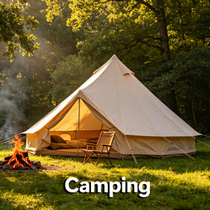
3. Cotton canvas — the glamping choice
Cotton canvas is the outlier. It is heavy, it must be stored bone-dry, and it is the most expensive option per metre. It is also the only fabric that breathes properly, muffles rain noise, and develops the patina that glamping guests photograph. A 285–340 gsm polycotton canvas with a stove jack is what separates a €90 tent from a €900 experience.
Stock canvas when you sell to glamping operators, resorts or rental fleets — buyers who amortise a tent over hundreds of guest nights and care about condensation and ambience more than weight.
Coatings and treatments worth paying for
- Taped seams — non-negotiable above a 2000 mm rating; un-taped seams leak before the fabric ever fails.
- UV inhibitor package — the cheapest way to double the service life of any fly in high-altitude or coastal markets.
- Flame-retardant treatment — required for CPAI-84 (US) and many EU retail listings; specify it at PO stage, not after sampling.
- Anti-mosquito mesh grade — B3 netting is the trade standard; finer grades cost more and restrict airflow.
What we recommend to new importers
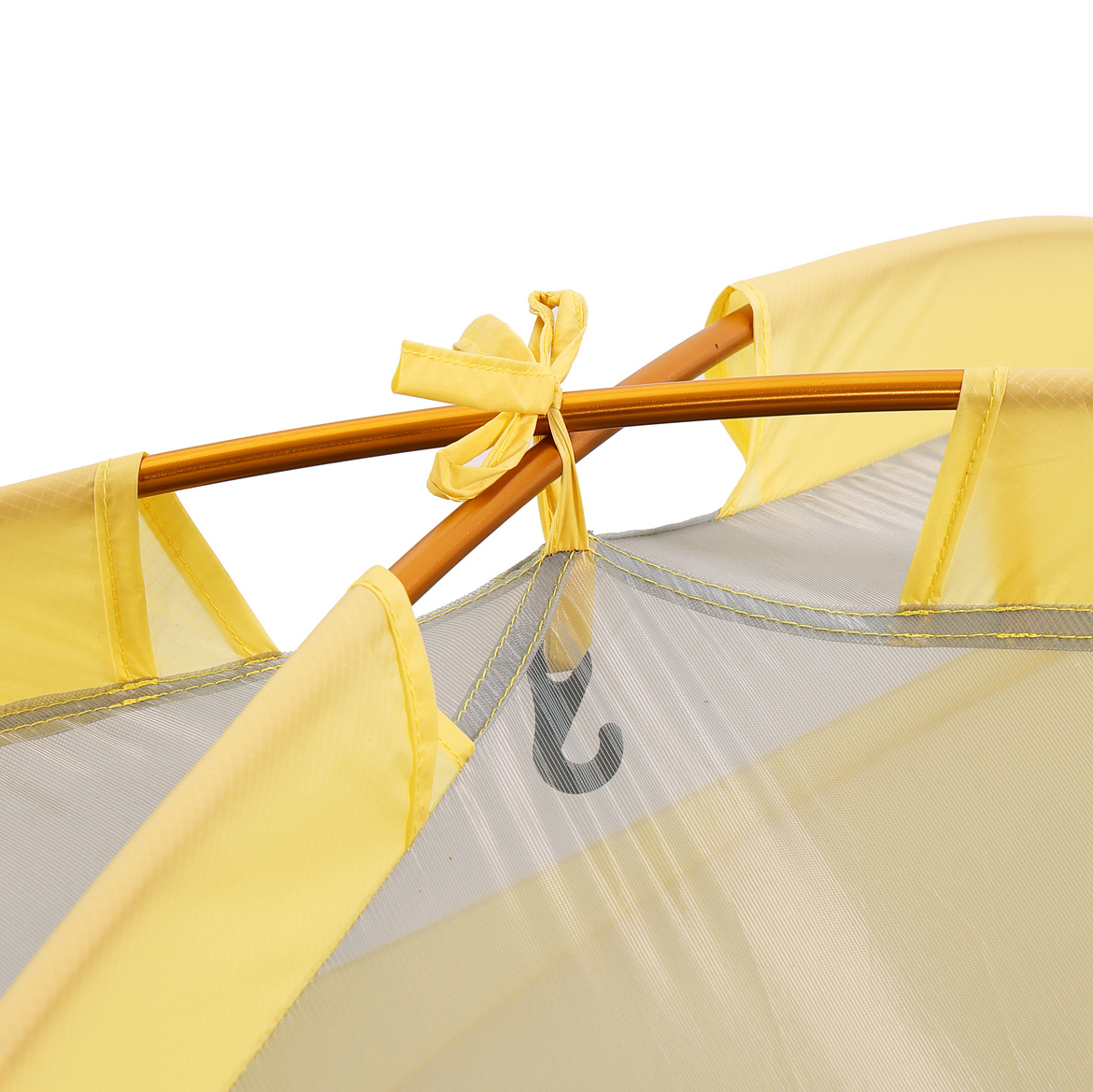
Start with a 210T polyester fly (PU3000) over a 210D oxford floor, fibreglass poles for sub-€50 retail and aluminium above it. It is the configuration with the lowest warranty rate across our whole catalogue, and it gives you room to move up-market later without changing factories. Once you have sell-through data, split the range: add a nylon ultralight line and one canvas hero product to anchor the brand story.
Want fabric samples before you commit?
We ship swatch cards covering every denier, coating and canvas weight we produce. Sampling lead time is 3–7 days and the fee is credited against your first bulk order.
Request a swatch card